Prostate Artery Embolization treats BPH with no cutting, no urethral catheter, and essentially no recovery. A tiny catheter goes in through the groin, does its work, and comes out. Nothing stays inside you but the medicine.
Physician-owned · Manhattan & Forest Hills · Same-week appointments
Dr. Shusterman was great. Took time to explain cause of my condition and treatment options. Office was neat and organized.
Listened to me and my reason for visit. Thoroughly explained options and tests that were given.
It gave me the full confidence that I could trust my health to them
Listens to your problems and does the best he can to help you out. Definitely recommend Dr. Shusterman.
Find your next step
Understand enlarged-prostate symptoms, compare treatment approaches, and prepare a focused discussion about suitability, recovery and follow-up. A procedure choice starts with an individual evaluation.
Benign prostatic hyperplasia (BPH) is a non-cancerous enlargement of the prostate that squeezes the urethra. The symptoms creep in slowly, so most men adapt instead of treating. You don't have to.
Flow that starts and stops or lacks force.
Waking two or more times to urinate.
Sudden need to go, more often than before.
Waiting, then pushing to get started.
The feeling you're never quite done.
Leaking once you think you've finished.
PAE works from the inside out. Through a tiny access point in the groin, a thin intra-arterial catheter is guided to the arteries feeding the prostate. Microscopic particles — the medicine — reduce that blood supply, and the enlarged gland shrinks on its own over the following weeks.
Then the catheter comes out. No cutting of the prostate, nothing passed through the urethra, no urinary catheter to go home with, no implant left in your body. Most men are back to their routine almost immediately.
PAE is technically demanding — outcomes track with how many a center has done. We have performed over 1,000 PAE procedures, more than any other center in New York City, with minimal to no recorded side effects — including very large prostates and men who can't have surgery.
Dr. David Shusterman evaluates you thoroughly as a urologist. Dr. Yosef Golowa performs the embolization. Then you return to the urology team — the physicians best equipped to manage your prostate long term — for all follow-up. Evaluation, procedure, and follow-up under one roof, in one office: a structure essentially no other group in New York offers.
A clinic that only offers one procedure will recommend that procedure. We offer the entire range, so when we recommend PAE — and we usually do — it's because it genuinely fits your prostate size, your symptoms, and your priorities. When it doesn't, you'll hear that too.
Alpha-blockers and 5-ARIs to relax the muscle or shrink the gland. The first line for milder symptoms — no procedure, but daily pills and side effects to weigh.
Steam injected into the prostate shrinks excess tissue. A short in-office procedure that preserves sexual function for most men.
Tiny permanent implants hold the lobes open like curtain ties. No cutting, no heat, fast recovery, no impact on ejaculation.
Our flagship. The prostate's blood supply is reduced through a thin catheter placed via a tiny groin access — no cutting, nothing through the urethra, no recovery to speak of, and nothing left inside but the medicine.
A 45-minute in-office treatment using targeted microwave energy to reduce obstructing tissue.
The long-standing surgical benchmark for severe obstruction, removing prostate tissue to restore flow when minimally invasive options aren't enough.
Every patient's plan starts and ends with Dr. Shusterman: he evaluates you, Dr. Golowa performs the embolization, and you return to the urology team for all follow-up. One office, one tightly integrated team — likely the only practice structured this way in New York.
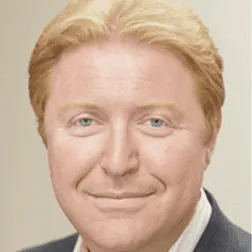 Founder · Board-Certified Urologist
Dr. David Shusterman earned his medical degree at Stony Brook and completed urology residency at Robert Wood Johnson Medical School, serving as chief resident. His background includes minimally invasive urology and research on prostate cancer and urinary incontinence. He speaks English and Russian.
View Profile →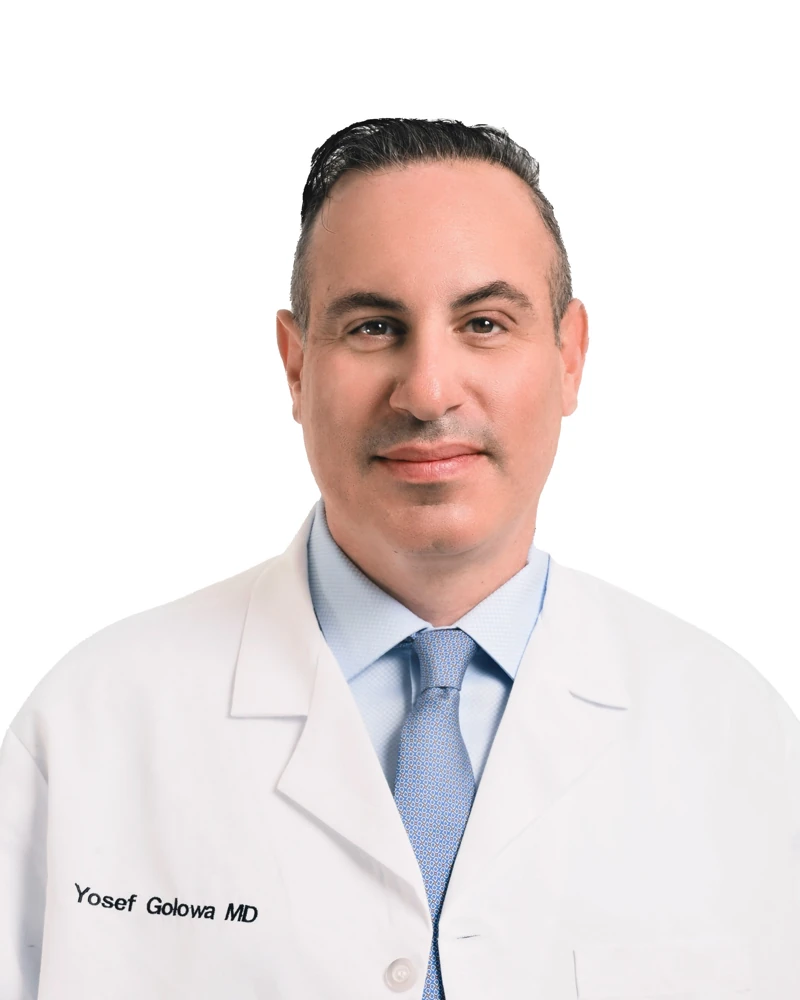 Interventional Radiology
Dr. Yosef Golowa earned his medical degree at New York University and completed diagnostic radiology residency at St. Luke’s–Roosevelt Hospital Center. His training includes vascular and interventional radiology at Massachusetts General Hospital and pediatric interventional radiology at Boston Children’s Hospital.
View Profile →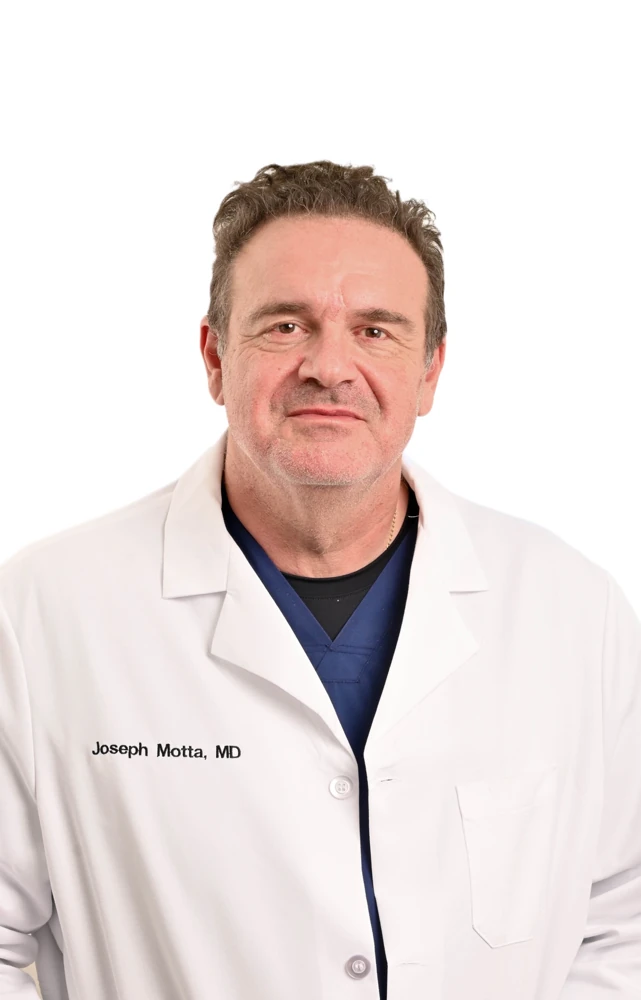 Urology
Dr. Joseph Motta earned his medical degree at Georgetown University and completed urologic surgery residency at Lenox Hill Hospital, serving as chief resident. His background includes clinical urology, medical teaching and research on prostate cancer screening. He speaks English, Italian, Spanish and French.
View Profile →We answer to patients, not to a corporate parent or a hospital's quarterly numbers. That freedom is why we can offer every treatment and recommend the right one.
We lay out every path honestly — what it does, what it costs you in recovery and in function — and we help you weigh it against your life.
"We empower men to work with their doctors to make the best individual decision — not the most profitable one."
Aetna, Blue Cross Blue Shield, Cigna, EmblemHealth, Empire Plan, Fidelis, GHI, HealthFirst, Magnacare, CareFirst and more. Not sure about yours? Call and we'll verify it for you.
Tell us what you're experiencing. We'll call to schedule and answer questions before you ever come in.
(212) 991-9991Fax (888) 331-9568 · Same-week appointments
Please call the office to request an appointment or discuss the next step. Do not send medical information by ordinary email. For a medical emergency, call 911.
Prepare a personal priorities list for a BPH consultation, covering symptoms, recovery, sexual concerns, medicines and follow-up questions.
Prepare a personal priorities list for a BPH consultation, covering symptoms, recovery, sexual concerns, medicines and follow-up questions.
Selected coverage of David Shusterman, MD
Interviews and expert commentary. Media appearances do not imply endorsement of this website, its services, books, or products.



 via KESQ